

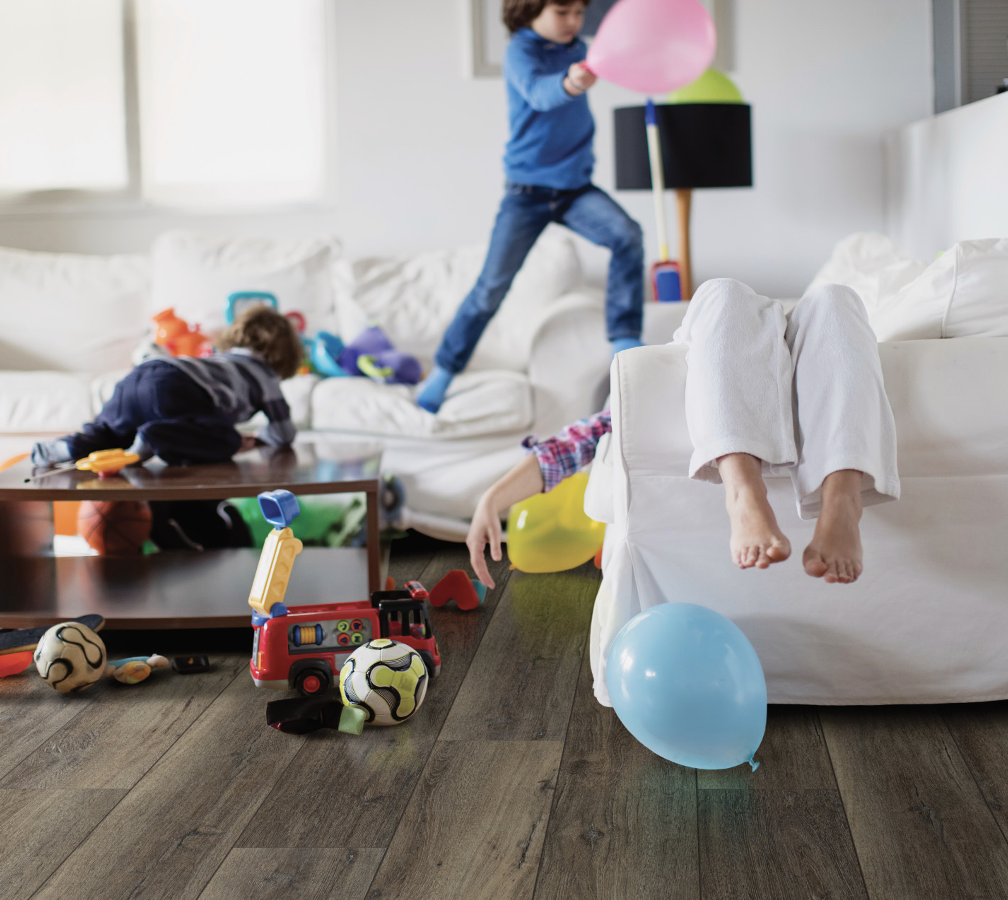
A child runs across the upstairs hallway, and the footsteps seem to land directly above the living room. Conversations pause, televisions get louder, and everyday movement begins to feel disruptive. In a two-story home, the flooring assembly plays a major role in how much sound travels between levels.
The good news is that quieter rooms do not always require major structural changes. Thoughtful flooring selections, quality padding, and careful installation can reduce impact noise while making bedrooms, hallways, and living spaces feel more comfortable.
Why Flooring Changes the Sound Profile
Footsteps, dropped toys, and moving furniture create impact noise. Hard surfaces reflect those sounds, while softer materials absorb more of the energy before it reaches the subfloor. That difference explains why an upstairs carpeted bedroom often sounds quieter below than a room finished with a rigid surface.
Sound also travels through gaps around staircases, vents, baseboards, and floor transitions. Flooring cannot solve every acoustic issue, but it can address one of the largest surfaces in the room. A professional evaluation should consider the subfloor, underlayment, room layout, and installation method together.
Carpet Offers the Strongest Everyday Cushion
Carpet remains one of the most effective flooring materials for reducing footfall noise in bedrooms, bonus rooms, and upstairs hallways. Its fibers soften individual impacts, while the pad adds another layer between the finished surface and the subfloor.
A dense pad usually provides better support and acoustic performance than a thin, inexpensive cushion. The carpet style matters, too. A plush construction can create a softer underfoot experience, while a textured style may conceal traffic patterns more effectively. Atlanta Flooring Studio’s plush carpet selections give homeowners a starting point for comparing pile heights, colors, and textures.
Families with pets or children should also consider maintenance alongside sound control. Pollen, red clay, and tracked-in debris can challenge soft surfaces throughout the year. Stain-resistant fibers and realistic cleaning expectations help preserve the room’s appearance. The broader carpet flooring guide explains how fiber, construction, and padding affect daily performance.
Using Hardwood Without Making Rooms Louder
Hardwood brings visual continuity and long-term design appeal, especially in stair-adjacent spaces, offices, and open living areas. It will not absorb sound like carpet, but the right assembly can reduce the sharpness of footsteps and furniture movement.
Engineered hardwood may offer practical advantages in multi-level homes because its layered construction provides dimensional stability. Pairing it with an acoustic underlayment can limit sound transmission while supporting the floor’s installation requirements. Homeowners comparing construction types can review engineered hardwood flooring before narrowing the selection by species, width, and finish.
A balanced plan often works better than using one material everywhere. Carpet upstairs can soften bedrooms and corridors, while hardwood downstairs creates a cohesive entertaining space. Area rugs and felt furniture pads add another layer of protection in rooms where hard flooring is preferred.
Plan the Whole Floor Assembly
Noise reduction depends on more than the visible surface. Subfloor condition, fasteners, transitions, stair details, and underlayment all influence the final result. Loose areas may squeak, while uneven sections can create hollow sounds beneath a new installation.
Ask the flooring professional to inspect the existing assembly before ordering materials. That step can reveal whether the project needs subfloor repairs, upgraded padding, moisture considerations, or a different transition strategy. It also helps prevent a beautiful new floor from failing to address the original noise problem.
Atlanta Flooring Studio is a WFCA member and received the My Alpharetta Best of 2025 award for Best Flooring Showroom. Homeowners can compare samples and discuss room-by-room acoustic priorities at the Alpharetta showroom, serving North Fulton homes with different layouts and construction types.
The best soundproofing plan matches each room’s purpose. Carpet usually delivers the greatest impact-noise reduction, while hardwood can perform comfortably with proper underlayment and thoughtful placement. Visit the showroom on State Bridge Road or schedule a free in-home estimate to evaluate your floors, subfloor, and sound concerns together.

