

Your hardwood floors looked flawless all spring. Then July hit, and faint gaps appeared between the planks in your hallway. By February, those same gaps vanished — replaced by subtle cupping along the edges of the same boards. If this sounds familiar, you're not dealing with a defect. You're dealing with physics, and understanding it is the first step toward protecting your investment.
Why Hardwood Reacts to Southern Humidity
Wood is hygroscopic. It absorbs and releases moisture from the surrounding air, expanding when humidity climbs and contracting when it drops. Metro Atlanta's humid subtropical climate pushes this effect to extremes. Summer months drive indoor relative humidity well past 60%, even with air conditioning running full tilt. Winter heating systems can pull it below 30%. A single solid plank can swell and shrink by measurable fractions of an inch across these swings, producing gapping in January and slight cupping during August's muggiest stretches.
The floor isn't failing. It's responding to its environment. Managing that environment consistently is what keeps the movement within acceptable limits year-round.
Engineered Construction: Built for Climate Stability
If you're still weighing your options, the single most impactful choice for long-term stability is selecting engineered hardwood over solid. Engineered planks use cross-ply construction — layers of real wood veneer bonded in alternating grain directions beneath a premium hardwood wear layer. That cross-lamination actively resists the expansion and contraction that solid boards undergo. For homes across North Fulton, where summer humidity is unrelenting and winter heating strips moisture from the air, the difference in dimensional stability is substantial.
Solid hardwood certainly has its advocates. A historic home being restored to period authenticity might call for it. But for the majority of newer construction and remodel projects throughout the area, engineered flooring weathers seasonal swings with far less drama. Our hardwood flooring guide breaks down both construction types in detail if you're weighing the trade-offs.
Daily Habits That Protect Your Floors
Climate control is your floor's best defense. The sweet spot for hardwood sits between 35% and 55% relative humidity, maintained consistently throughout the year. That means running a dehumidifier during summer, especially in homes with crawl spaces where ground moisture wicks upward. In winter, a whole-home humidifier or strategically placed portable units prevent the low-humidity conditions that cause gapping.
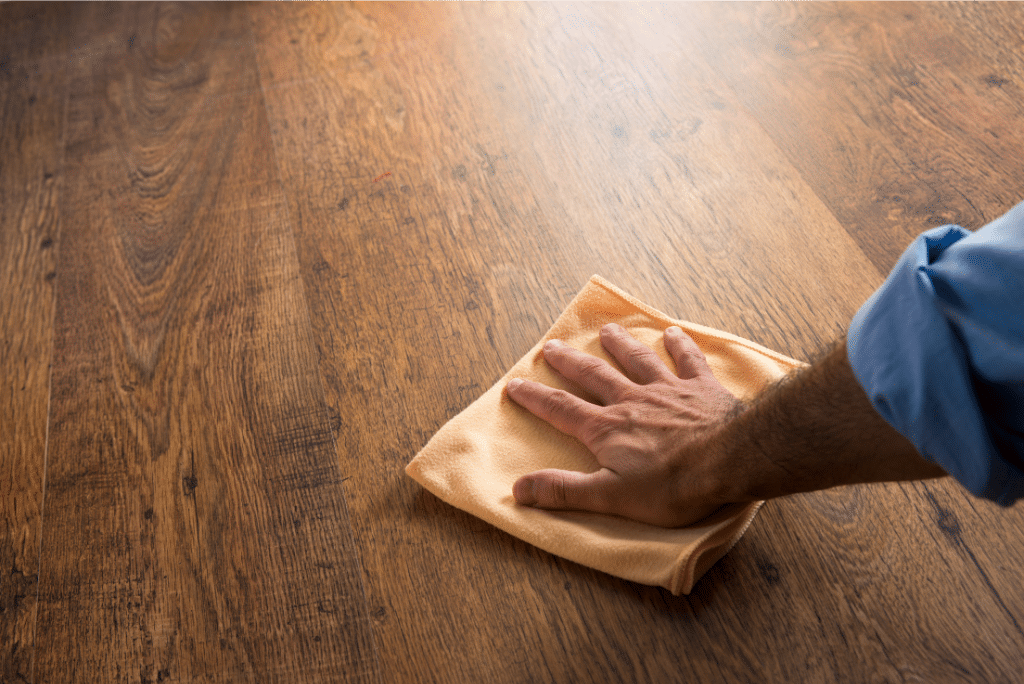
Routine cleaning supports the effort. Use a microfiber mop rather than anything wet — standing water is hardwood's enemy regardless of season. Wipe spills immediately. Area rugs in high-traffic zones catch grit before it scratches the finish while also buffering localized humidity shifts near entryways. These are modest habits, but across a decade or more of ownership, they meaningfully extend the life of your floors.
The Installation Factor You Shouldn't Overlook
Even premium hardwood underperforms if it wasn't given time to acclimate. Planks need several days sitting in the home's normal temperature and humidity conditions before fastening. Skipping this step virtually guarantees problems within the first seasonal cycle. Equally critical are proper expansion gaps along walls and transitions — room for the floor to move instead of buckling.
Atlanta Flooring Studio earned the My Alpharetta Best of 2025 — Best Flooring Showroom award in part because every installation follows climate-specific protocols. We carry premium brands like Fabrica, Mercier, and Boen alongside trusted names like Mohawk and Shaw. You can browse the full selection online, then visit our showroom on State Bridge Road to see samples in person — or take advantage of our shop-at-home service if you'd rather compare planks against your own lighting and wall colors.
Care for your hardwood well, and it will outlast nearly every other surface in your home. Schedule your free in-home estimate today, and let's find the right floor for the way you actually live.

