

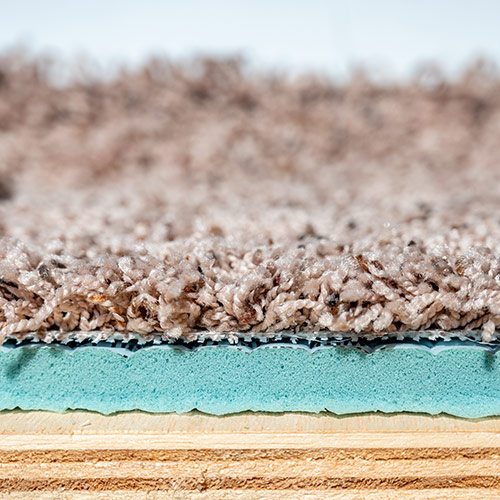
Most homeowners shopping for new carpet spend hours comparing fiber types, running their hands across sample swatches, and debating color choices. That attention makes sense — the visible surface sets the tone for an entire room. But tucked underneath every square foot of carpet sits a layer most people never think about, quietly determining whether their floors feel luxurious or lifeless two years after installation.
What Carpet Padding Actually Does
Carpet padding — also called cushion or underlay — absorbs the impact of every footstep. Without it, carpet fibers bear the full force of daily traffic directly against the subfloor, compressing flat within months. A quality pad distributes weight across a wider surface area, letting those fibers rebound between uses.
Beyond cushioning, padding acts as thermal insulation. A dense pad traps air between the subfloor and carpet surface, reducing heat loss through the floor during cooler months. It also dampens sound transmission between floors — particularly valuable in two-story homes where footsteps echo from above. In bedrooms and family rooms where families spend hours on the floor, that added warmth and quiet make a noticeable difference.
How Padding Extends Your Carpet's Lifespan
Every time someone walks across the room, the carpet backing flexes microscopically. Over thousands of steps, that repeated flexing breaks down the backing material. A proper pad absorbs the majority of that impact energy before it reaches the carpet itself.
The Carpet and Rug Institute recommends matching pad density and thickness to the specific carpet style. A dense, thinner pad supports tightly twisted plush carpet without letting it buckle, while a thicker pad gives looser styles room to flex. Getting this pairing wrong can void manufacturer warranties — a detail many big-box retailers gloss over.
Padding also guards against the moisture and grit that seep through fibers over time. A pad with a moisture barrier prevents spills from reaching the subfloor, where trapped dampness breeds mold and deteriorates adhesives.
Choosing the Right Padding for Your Home
Different rooms demand different pad characteristics. Bedrooms benefit from thicker, softer pads for comfort underfoot. Staircases and hallways need firmer, denser padding that stabilizes the carpet against constant directional stress.
For households with pets or young children, a stain-resistant carpet paired with a moisture-barrier pad handles accidents before they soak through. Many Alpharetta families building out basement playrooms prioritize this combination for finished lower levels, where Georgia's humidity can transmit moisture upward through concrete slabs.
For a deeper look at how fibers, construction, and installation work together, Atlanta Flooring Studio's carpet flooring guide walks through each factor that determines how a carpet performs year after year.
Selecting carpet without thinking about padding is like buying a mattress and sleeping on the box spring. The surface matters, but what lies beneath determines how it actually feels — and how long it lasts. If you would rather compare materials without leaving home, Atlanta Flooring Studio's shop-at-home service brings samples directly to your door. To feel the difference quality padding makes with your own hands, schedule a free in-home estimate and get expert guidance matched to the rooms you are updating.

