

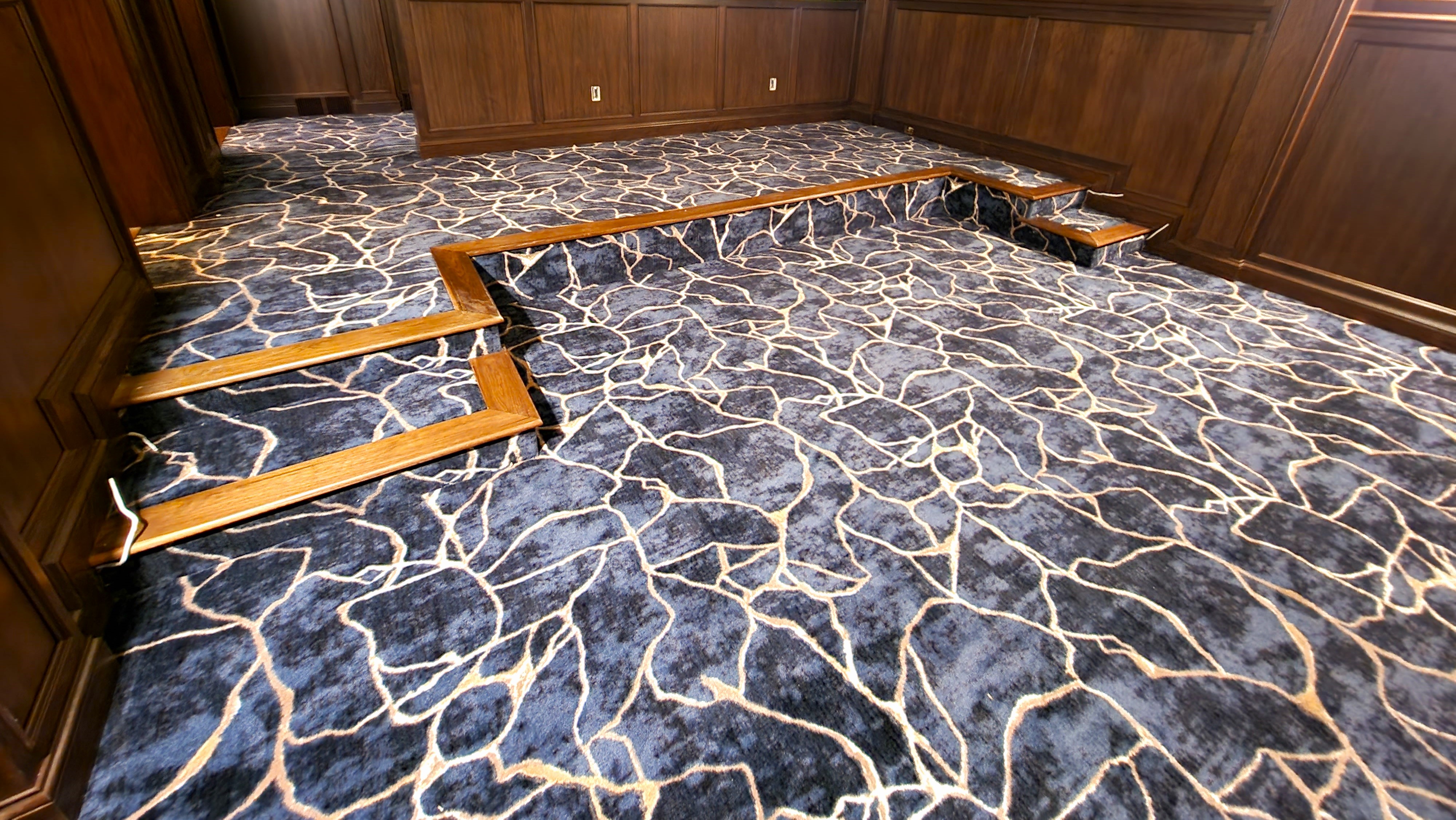
A dedicated media room should feel different from the rest of the house. In a Milton home, that might mean dimmable lighting, comfortable seating, built-in shelving, and flooring that softens the room’s acoustics. Carpet brings warmth underfoot while helping reduce the hard echoes that can make dialogue and music sound less balanced.
The best design starts with how the room will be used. A space for movie nights, gaming, and weekend gatherings needs flooring that feels comfortable, handles furniture, and remains easy to maintain. The goal is controlled comfort, not simply the softest surface available.
Choose a Carpet Texture That Supports the Room
Plush carpet creates a relaxed, lounge-like atmosphere, especially beneath sectional seating and oversized recliners. A dense, low-profile style offers a cleaner appearance and makes it easier to move chairs, ottomans, and media consoles. Textured carpet can also disguise minor shading from foot traffic better than a perfectly uniform surface.
Color matters just as much. Deep charcoal, warm taupe, and muted brown can reduce screen glare while complementing wood cabinetry or painted built-ins. Very dark carpet creates a dramatic theater effect, but mid-tone shades often provide a more forgiving balance for dust, crumbs, and everyday use. Comparing plush carpet styles can help narrow the look before you bring samples into the room.
Do Not Overlook the Cushion Beneath It
Carpet padding affects more than comfort. The right cushion supports the fibers, improves resilience beneath seating, and contributes to the quieter atmosphere that makes a media room more enjoyable. A padding professional can also account for door clearance, furniture weight, and the carpet’s construction.
Fiber selection deserves equal attention. Nylon is known for resilience, while SmartStrand offers a practical route for households concerned about stains. Homes with pets or frequent guests may benefit from pet-friendly carpet, particularly when the room connects to a hallway or open living area.
Balance Acoustics, Furniture, and Indoor Climate
Carpet absorbs some reflected sound, but room layout still shapes the listening experience. Curtains, upholstered seating, wall treatments, and area rugs can work together to limit harsh reflections. Leave enough clearance around vents and doors, and avoid placing heavy furniture so tightly against the walls that maintenance becomes difficult.
North Georgia’s humidity can influence indoor comfort and flooring care. Keep the room properly conditioned, respond quickly to spills, and follow the manufacturer’s cleaning recommendations. A thoughtful carpet flooring guide explains how fiber, construction, cushion, and maintenance needs work together.
Bring Samples Into the Actual Room
Showroom lighting can make a carpet appear cooler, warmer, lighter, or darker than it will look beside your screen and furniture. View samples during both daylight and evening conditions. Fabrica, Karastan, Stanton, Mohawk, and Shaw offer different approaches to texture, pattern, and performance, giving homeowners room to refine the design without settling for a generic look.
Atlanta Flooring Studio’s shop-at-home service makes this comparison easier. Samples can be considered beside cabinetry, upholstery, wall color, and trim, helping you judge the complete room rather than one isolated square.
A well-designed media room should invite people to stay awhile. Choose a dense, comfortable carpet, pair it with suitable padding, and test the color under real lighting before installation. Visit the Alpharetta showroom or arrange a complimentary in-home consultation through a free flooring estimate to plan the room with Atlanta Flooring Studio.

