

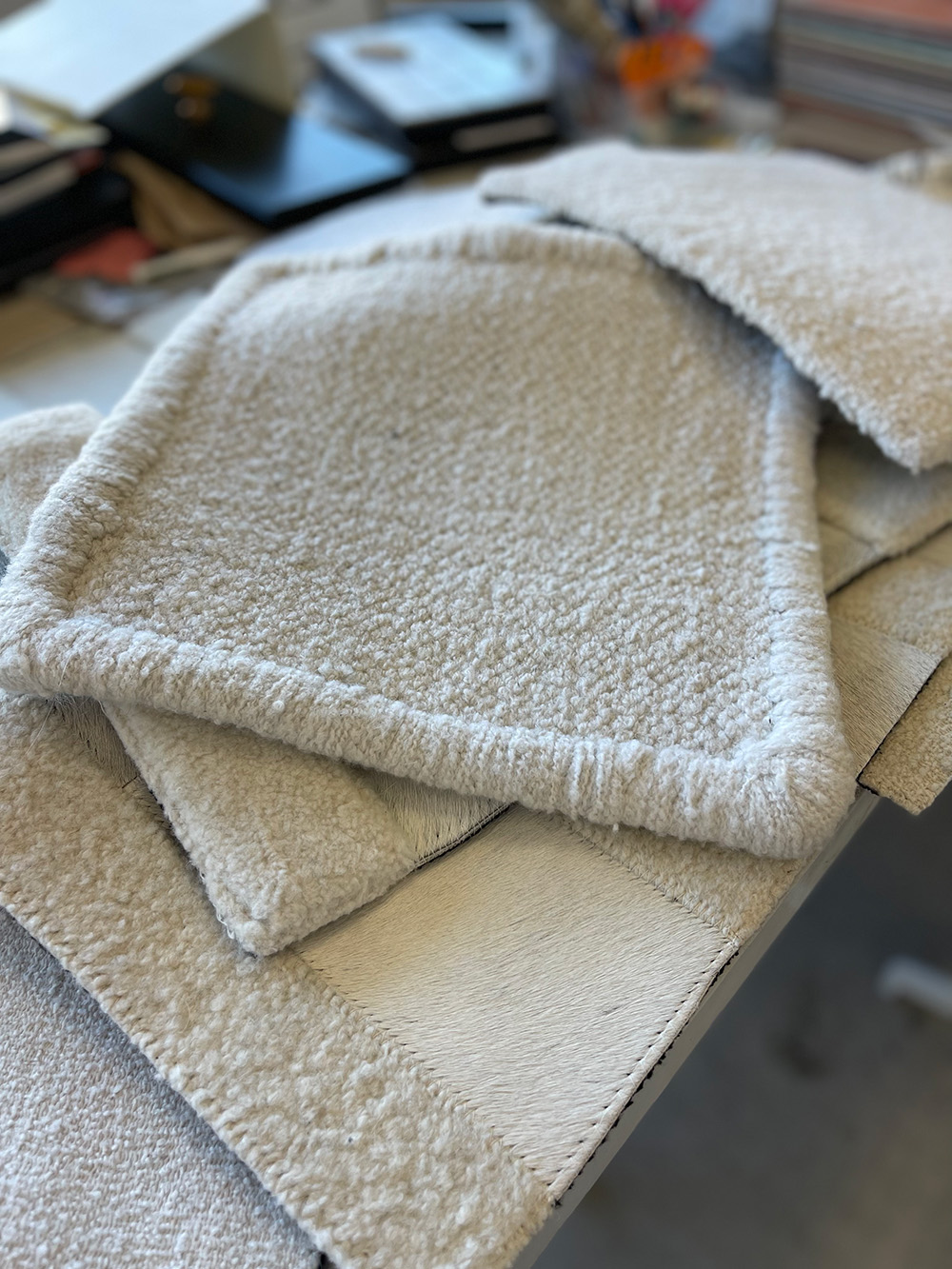
Here is a quiet truth about the big-box rug aisle that nobody prints on the price tags: it sells roughly six standard sizes to a world of infinitely varied rooms. The sprawling open-plan great rooms of Alpharetta, the long upstairs hallways of Johns Creek two-stories, the breakfast nooks, window-lined sunrooms, and odd-angled lofts of Roswell — none of these spaces were ever designed around a standard 8×10 rectangle, and they show it. So homeowners compromise, room after room: a rug that floats too small beneath the sectional, a hallway runner that stops three awkward feet short of the landing, a dining rug that tips chairs off its edge at every single meal.
There is a better supply chain, and it runs through a flooring store. Custom area rugs and area rug binding are named services at Atlanta Flooring Studio: choose nearly any broadloom from our carpet catalog, have it cut to your exact dimensions, and have the edges professionally bound into a finished rug — sized to the room, not to a warehouse SKU. This guide covers the whole craft in working detail: edge treatments and what each one says, sizing rules (including the dining-room test most store-bought rugs fail), the pad physics quietly working underneath, and the small optical illusion that makes every cut-pile rug look like two different colors depending on where you stand. By the end, you will shop rugs the way our design consultants do.
The Edge Makes the Rug: Visit the Atelier
Take away the edge treatment and a custom rug is just a carpet remnant. The finishing — how the cut edge is wrapped, sealed, and styled — is what turns broadloom into furniture. Three treatments cover most projects; try each on the corner below:
Serging: a continuous wrap of yarn around the edge — the classic, slightly rounded finish that reads most like a manufactured rug. The default for most custom pieces, in a color matched or contrasted to the field.
The Dining Room Test Most Rugs Fail
Dining rugs have one job that showrooms never demonstrate: the chair pull-back. When a guest slides a chair out to sit, all four legs should stay on the rug — otherwise every dinner starts with a stumble and ends with frayed edges. The rule of thumb is generous clearance beyond the table on every side, which is exactly why standard sizes so often fail real dining rooms. Test it:
The standard-size compromise: the rug fits the table and nothing else. Every pulled-back chair drops its rear legs off the edge — six wobbles per dinner party. This is the floor plan the big-box aisle sells you.
The Physics Underneath: Why the Pad Is Not Optional
Every rug on a hard floor is a physics experiment: a soft slab resting on a smooth surface, with foot traffic applying lateral force all day. Without a pad, the experiment ends the same way every time — the rug creeps, bunches, and trips someone in the hallway. With the right pad, the rug grips the floor, wears more slowly (cushion absorbs the grinding), and protects the hardwood underneath from trapped grit. Run the shove test:
Bare rug on smooth hardwood — the classic hallway skating rink. Try the shove.
The Two-Color Rug Illusion
One more piece of rug literacy, because it generates a phone call every month: the same cut-pile rug genuinely looks different from opposite ends of a room. Carpet pile leans — the nap — and viewing with the nap shows the yarn tips (darker, richer) while viewing against it shows the yarn sides (lighter, shinier). Flip the view:
Viewed with the nap: light sinks into the pile and the color reads deep and saturated — the rich version of your rug.
Sizing Rules Beyond the Dining Room
The chair pull-back is dining’s law; the rest of the house has its own. In living rooms, the working rule is front-legs-on: every seating piece should plant at least its front feet on the rug, tying the furniture into one conversation instead of leaving a postage stamp adrift under the coffee table. The most common great-room mistake in our market is a rug one size class too small — which is precisely the mistake custom cutting deletes, since the “next size up” becomes whatever your seating plan measures. In bedrooms, the rug’s job is the first barefoot step: extend it beyond the bed’s sides generously enough that morning feet land soft, or run custom pieces along each side where a single giant rectangle would vanish pointlessly under the bed. In halls, leave an even reveal of floor along each side of a runner — symmetry is what reads intentional — and let the length match the actual architecture, which is exactly what binding makes possible.
And everywhere, respect the reveal: rugs are meant to frame the floor, not impersonate wall-to-wall. A border of visible hardwood around the rug is part of the composition — especially when that hardwood is the floor you invested in or had refinished. Custom sizing is how you hit those reveals exactly instead of approximately.
Choosing the Field: Pattern, Pile, and Atlanta Light
Once size is solved, the field decision is pure pleasure — with three practical notes from our showroom floor. Pattern hides life: a tonal pattern or textured frieze forgives crumbs, paw prints, and the week between vacuumings far better than a flat solid, which matters in dining rooms and family spaces. Pile height trades luxury against legibility: deep plush is glorious beside a bed and impractical under dining chairs, where low and dense rules. And light: Atlanta’s tree canopy makes many North Fulton interiors a shade darker than homeowners expect, so audition samples in your actual rooms before committing the field color — free shipped samples exist for exactly this, and the nap-flip effect from the demo above means you should look from the room’s main viewpoint, not the showroom aisle’s.
The deeper fiber decision — nylon resilience, polyester color and value, wool luxury — follows the same logic as wall-to-wall; our carpet fiber overview is the five-minute course, and the same page of the catalog that would carpet your stairs can become your living room’s rug.
Pads, Decoded by Floor Type
The shove test made the case for a pad; here is the nuance by what is underneath. Over hardwood — especially refinished hardwood — choose a pad sold as hardwood-safe: the goal is grip plus breathability without chemistries that can interact with finishes, and the habit of lifting the rug occasionally to clean beneath protects the wood from trapped grit. Over luxury vinyl and laminate, similar logic applies — floor-friendly materials, no aggressive adhesives. Over tile and stone, grip is the whole game: smooth fired surfaces are the slipperiest stage a rug ever performs on, and the pad is a safety device first. Over carpet — yes, rugs layer over broadloom too — a specific pad class exists to keep the rug from crawling on the soft surface below. The unifying rule: the pad is chosen for the floor as much as the rug, which is one more reason buying rugs from a flooring store is quietly the smarter supply chain.
Care Through an Atlanta Year
A bound rug’s care calendar follows the same Georgia rhythm as every floor here. Spring’s pollen weeks reward an extra vacuum pass — rugs near doorways are the house’s pollen filters, which is exactly the job you want them doing, since a rug is washable real estate in a way wall-to-wall never is. Summer storm season makes doorway runners earn their keep; let them dry properly after soaking days. Year-round, vacuum with the nap rather than against the bound edge, rotate pieces in sun-drenched rooms so any light-mellowing happens evenly, and blot spills promptly per the fiber’s guidance. Bound edges are durable tailoring, not fragile trim — but like all tailoring, they appreciate not being chewed by a beater bar at full attack angle.
Why a Flooring Store Beats a Rug Aisle
Worth saying plainly: a rug store sells you what it stocked; a flooring store builds what you measured. The broadloom wall at our Alpharetta showroom is hundreds of styles deep — every one a candidate rug — and the people advising you are the same design consultants and installers who handle whole-home flooring, which means the rug conversation naturally includes the floor beneath it, the transitions around it, and the rooms beyond it. Add the named services — custom area rugs, area rug binding, carpet binding — and the machinery for made-to-measure soft goods is already running here every week. The rug aisle cannot say any of that.
Where Custom Rugs Solve North Fulton Rooms
The open-plan great room is the headline case: seating zones in Alpharetta and Milton homes routinely want rugs larger than retail’s biggest standard sizes, and a custom-cut field with a wide-border edge anchors furniture that otherwise floats. Dining rooms get the pull-back fix you just tested. Halls and stair landings get runners measured to the actual architecture — including the long second-floor halls of local two-stories that standard 8-foot runners insult. Bedrooms over hardwood get softness exactly where bare feet land without surrendering the wood. And matching sets — a great-room rug, a runner, and a bedside pair cut from the same broadloom — deliver the coordinated look designers charge for, straight off our showroom racks.
There is also the renovation angle our team sees weekly: a household replaces wall-to-wall carpet with hard flooring, then misses the softness. Binding lets you keep the comfort as furniture — sometimes literally cutting a rug from the same carpet style you loved, now sized and edged for the new floor. It pairs naturally with projects from our services lineup, where carpet binding and custom area rugs sit right beside residential installation.
Measuring for a Custom Rug: The Ten-Minute Homeowner Method
You do not need professional tools to start — you need painter’s tape and honesty. Tape the outline of your candidate rug directly onto the floor at the size you think you want, then live with the rectangle for a day. Pull the dining chairs out across it. Watch where feet land getting out of bed. Check the reveal of visible floor along walls and hearths. The tape will correct you — it almost always argues for larger — and the corrected dimensions are your custom order. Add the practical checks: note door swings the rug must clear, vents it should not smother, and the main viewpoint that decides nap direction (the flip demo above). Bring those numbers and photos to the showroom, or fold the measuring into a free in-home estimate and let our team capture it precisely — especially worthwhile when the rug accompanies a bigger flooring project anyway.
The Designer Moves Worth Copying
Three custom-rug maneuvers do most of the design work in the projects we see. The color echo: pull a quiet tone from the room — drapery, art, a kitchen island visible across the open plan — into the rug’s field or its binding, and the space snaps into coherence. The matched suite: cut the great-room rug, the hallway runner, and bedside pieces from one broadloom so connected sightlines read as one decision; it is the move that makes open plans feel professionally finished, and it is uniquely easy when your rugs come from a carpet wall instead of a rug rack. The border frame: a wide contrasting binding (the Atelier’s third option) turns a budget-friendly solid field into something that photographs custom — often the highest style-per-dollar trick in the catalog. None of these requires a decorator on retainer; they require a design consultation, which here is part of the service.
How the Custom Process Works Here
Simpler than it sounds: pick a broadloom you love — in the catalog, from free shipped samples, or on the showroom floor at 11380 State Bridge Rd in Alpharetta — then bring your dimensions, or let a free in-home estimate capture them precisely along with any flooring work you are planning anyway. Choose the edge (the Atelier above is the real decision), choose the pad, and the piece is cut and bound to order. Design consultation is a named service here, so the rug conversation can include the bigger picture: coordinating field color with your wood tones, sizing to your actual furniture plan, and orienting the nap toward the room’s main view.
Custom Rug Questions, Answered
Is a custom-bound rug more expensive than a store-bought one?
What carpet styles work best as rugs?
Can you make runners for a long hallway or stairs landing?
Will a rug damage my refinished hardwood?
How do I clean a custom rug?
How long does a custom rug take to make?
Can I get a custom rug to match flooring you are installing for me?
Where do I start?
Rooms Deserve Better Than Standard Sizes
If this guide has a single takeaway, it is that rugs deserve the same seriousness as the floors beneath them — because functionally, they are flooring: they take the traffic, set the room’s temperature and acoustics, protect the surfaces below, and carry more of the design than almost any furniture purchase. Treating them as an afterthought from a seasonal aisle is how rooms end up almost right. Treating them as made-to-measure soft flooring — sized with tape on your actual floor, edged like tailoring, padded for the surface underneath, and oriented for the light you live in — is how rooms end up finished. That is the entire difference between buying a rug and commissioning one, and the second option lives twenty minutes away on State Bridge Road.
The rug aisle asks your room to compromise; binding asks your room what it actually measures. For the great rooms, dining rooms, and halls of Alpharetta, Johns Creek, Roswell, and Milton, custom area rugs are the difference between furniture that floats and rooms that feel finished — with edges chosen like tailoring, naps oriented to the light, and pads doing silent physics underneath. See what neighbors say in our reviews, tape your rectangle on the floor tonight, and bring us the dimensions it teaches you.
Cut to your room, bound to your taste — carpet comfort, custom-fitted.
Request Your Free Estimate
